I have something of a confession to make: I really love listening to the kinds of podcasts that, if they were titles in a bookshop, would be found in that most ugly-sounding of sections: “self-help”. I suppose I listen, on and off, to a good half-dozen or so of them — they keep me company when I’m doing chores, they motivate me, and they often give me fresh ways of thinking about my life (and even about some of the subjects I write on).
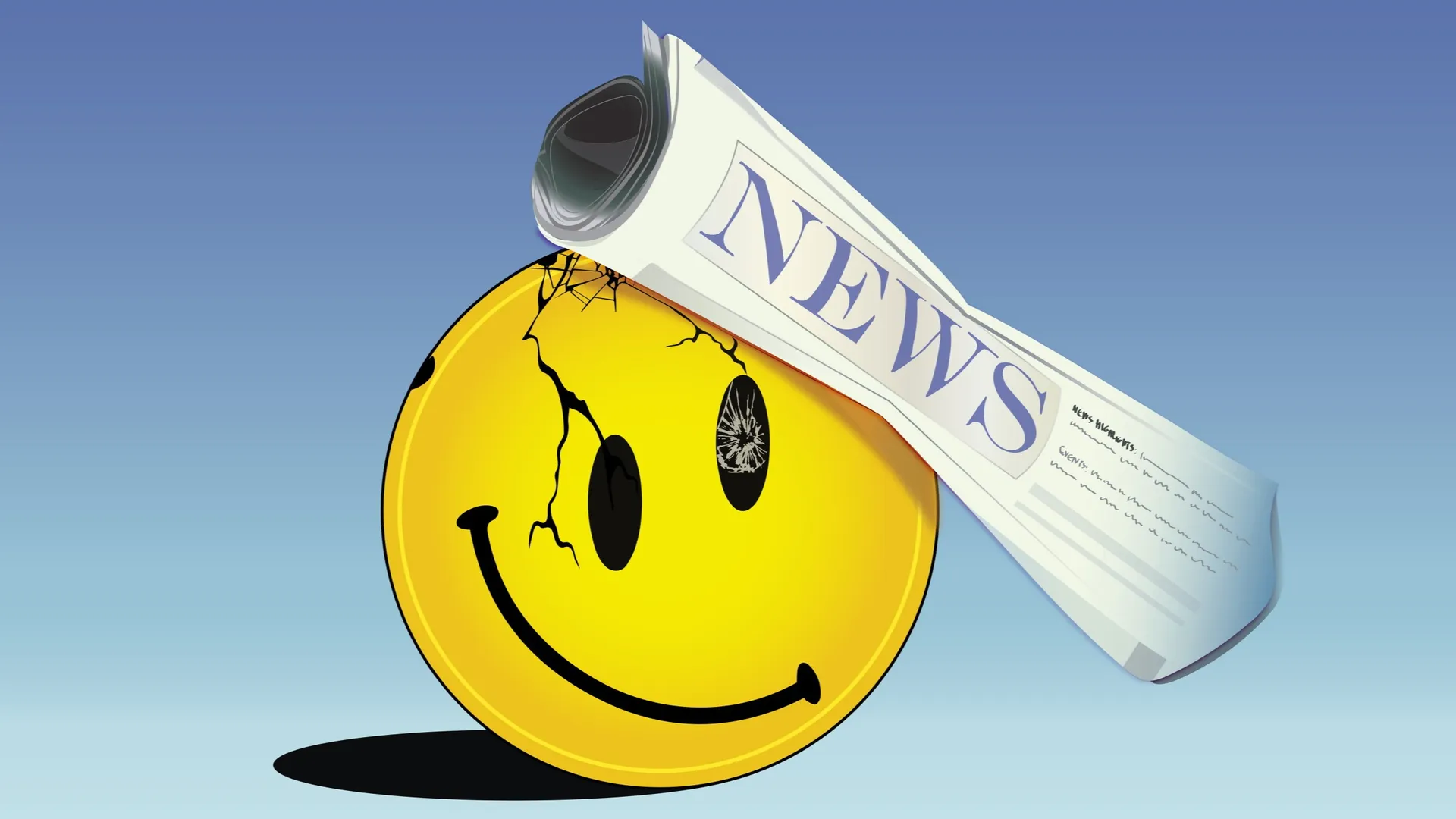
But, in recent months, I have noticed a slightly troubling trend on these podcasts: many of them seem to be recommending that, in order to, you know, “live your best life”, you should switch off from the news entirely.
I should make it clear that I do not think we should all be the kind of “news junkies” who keep up with every incremental development of a story as if that were some kind of civic duty. At the risk of sounding like one of the self-help podcasters myself, feverishly following these “BREAKING NEWS” alerts as if they were goals in a football match is often simply an escape from dealing with the more complicated and fraught areas of one’s life.
But I do worry — and not just for the sake of my gainful employment — about what appears to be a broader switching off from what is going on in the world. A report published over the summer by Oxford university’s Reuters Institute found that a record high of 39 per cent of people worldwide say they sometimes or often actively avoid the news, up from 29 per cent in 2017.
In Britain, the decline in engagement over the past decade has been especially staggering — 46 per cent now avoid the news, up from 24 per cent in 2017, while interest has also plummeted: just 38 per cent of Brits say they are “very” or “extremely” interested in the news, down from 70 per cent in 2015. In America, with its news-as-entertainment cable news culture, interest is a little higher, but it has fallen there too: from 67 per cent to 52 per cent over the same period.
Social media platforms like X or TikTok tend to be the scapegoats for all the ills of my industry.
But engagement in the news on these sites is also falling: a recent survey by market research firm GWI found 35 per cent of Americans have reduced their social media consumption over the past three months, with almost half citing political discussions as the reason for pulling back, and 30 per cent saying political content “negatively impacts mental and emotional wellbeing”.
That people should want to protect their mental health by switching off from the news sometimes is totally understandable. (I regard regularly switching off from the internet as a whole as an excellent idea, and undertake self-imposed digital detoxes myself.) And when the news is particularly distressing or frightening, avoiding it might indeed be helpful: a study conducted in the first few months of the Covid-19 pandemic in the Netherlands found that news avoidance was associated with higher levels of perceived wellbeing.
But to disconnect from the news entirely is to suppose that someone else has done the work for you; that someone else can tell you what’s true and what’s false, who is right and who is wrong. It is also, in a democracy, to relinquish both the privilege and the responsibility of holding our leaders to account. How are we to ensure our nations are governed effectively, and that the right leaders get into power in the first place, if we know nothing of the candidates on offer, nor of the issues they propose to tackle?
Our fractured, algorithm-driven attention economy has already made it difficult to agree on what is real and true. And while our much-maligned “mainstream media” institutions must certainly do better at pursuing objectivity, turning off from them can surely only make the prospect of common truths dimmer, while distortions in people’s perceptions of reality become more prevalent.
I was struck, recently, by a chart from Gallup, showing Americans’ perceptions of the state of crime at both a local and a national level. According to the FBI, violent crime fell by almost half between 1993 and 2022. While only 17 per cent in Gallup’s 2023 survey said the crime problem in their area was either “very” or “extremely” serious, almost four times as many — a record 63 per cent — said the same of the situation in America as a whole. Similar perception gaps can be seen in the way Americans view the state of their economy.
Such distortions are all too easily exploited, of course, by people who deal in deliberate untruths, who sell them as facts — sometimes terrifying ones — and who offer simple, but wrong, solutions to them. In our utterly overwhelming world, disengagement from reality might seem like another easy answer. Alas, again, it is almost certainly not the right one.