Ireland, Spain, the Netherlands and Slovenia have threatened to pull out of the Eurovision Song Contest if Israel takes part, proposing to boycott one of the world’s most-watched TV programmes over the war in Gaza.
The growing revolt among participants in the 69-year-old competition, due to be held in Vienna in May, comes amid a growing international backlash against Israel’s offensive against Hamas and the catastrophic humanitarian conditions it has caused in Gaza.
The Netherlands on Friday became the latest nation to condition its participation on Israel’s withdrawal, calling on the European Broadcasting Union (EBU), which runs the event, not to allow Israel to compete.
In a statement, Dutch public broadcaster AVROTROS said it “can no longer justify Israel’s participation in the current situation, given the continuing and severe human suffering in Gaza”.
It expressed “deep concern” at the ban on allowing international journalists into Gaza, the casualties among reporters in the strip and “proven evidence of interference by the Israeli government during the most recent edition of the Eurovision Song Contest, in which the event was used as a political instrument”.
Israel, which has competed in Eurovision since 1973, came second in this year’s event after placing top in the phone-in vote by viewers, prompting a string of countries to allege there had been manipulation. The final score is a combination of viewer and jury votes.
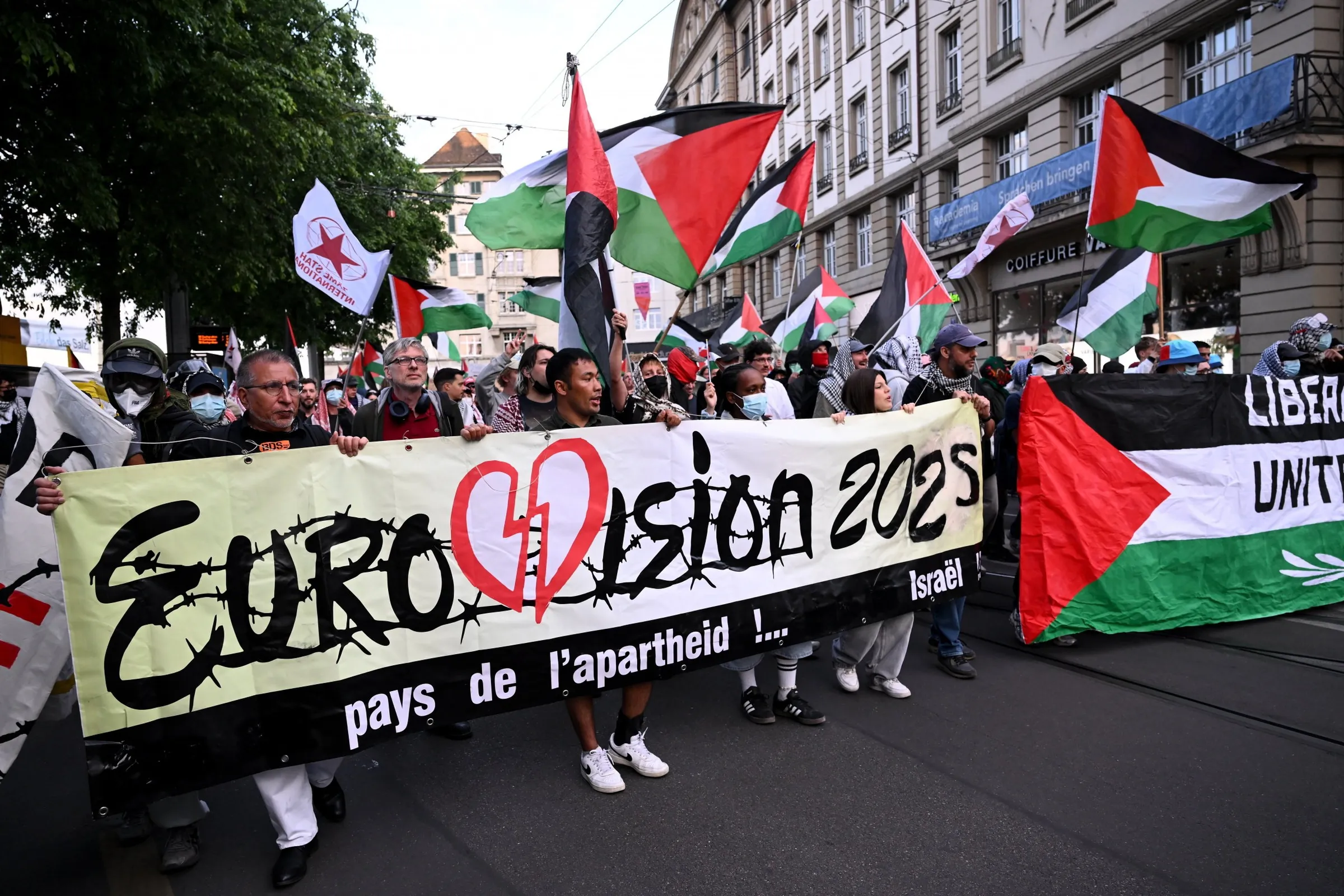
Israel’s public broadcaster Kan, which has signalled it intends to go ahead with its participation in the 2026 competition, denied that Israel’s contestant had not won the popular vote fairly.
“The detached elites in those countries that call for a cultural boycott against Israel in the Eurovision are injecting politics into culture and antisemitism into music,” Israel’s foreign ministry said on Friday, accusing Hamas of being responsible for prolonging the war.
National public broadcasters choose their domestic entries and screen the contest.
The EBU said in a statement that it was consulting with all members “to gather views on how we manage participation and geopolitical tensions” around the contest.
Broadcasters have until mid-December to confirm if they wish to take part in next year’s event. “We understand the concerns and deeply held views around the ongoing conflict in the Middle East,” the EBU added.
The Netherlands’ announcement came after Ireland’s national broadcaster RTÉ said on Thursday that taking part in the contest if Israel did not withdraw would be “unconscionable given the appalling loss of lives in Gaza”.
Ireland has won the competition a joint record seven times. “RTÉ is also deeply concerned by the targeted killing of journalists in Gaza and the denial of access to international journalists to the territory, and the plight of the remaining hostages,” it said.
The EBU in 2022 banned Russia from participating in Eurovision following its full-scale invasion of Ukraine. It said its decision “reflects concern that . . . inclusion of a Russian entry . . . would bring the competition into disrepute”.
Ireland, Spain and Norway jointly recognised the state of Palestine in May last year. Slovenia followed suit a month later.
Spain’s culture minister Ernest Urtasun also opened the door to his country pulling out of Eurovision, saying this week: “If we don’t manage to expel Israel and it takes part, then we’ll need to take measures.”
“I don’t think we can normalise Israel’s participation in international events as if nothing is happening,” he added. Any Spanish decision to quit would be formally taken by national broadcaster RTVE, which is state-controlled.
Slovenia’s RTV SLO broadcaster said it would take a final decision depending on the EBU’s stance and whether or not it heeds concerns over the transparency of the 2025 contest’s vote.
Iceland’s RÚV has expressed similar concerns and indicated it could withdraw, but has not yet called for Israel to be excluded.
Norway’s public broadcaster NRK said it was not planning to boycott Eurovision but was actively taking part in the EBU’s discussions and had “confidence” in the process.
Additional reporting by Richard Milne in Oslo