Argentina’s Javier Milei is in the biggest crisis of his presidency, after scandals and strategy mis-steps led to a stinging loss in local elections, unnerving voters and markets six weeks out from a critical midterm vote.
After a largely successful first year in office, when falling inflation bolstered robust popular support for Milei’s austerity, recent months have battered the government.
A corruption scandal ensnared his sister and chief of staff Karina. The economy’s recovery slowed sharply, disillusioning voters. He alienated moderate allies in congress, who sided against the government on a series of spending votes. His approval rating fell below 40 per cent for the first time.
Then, last Sunday, his libertarians suffered a shock landslide defeat by the leftwing Peronists at local elections in Buenos Aires province, which Milei had framed as a referendum on his government.
The peso has fallen 4 per cent since the vote, while Argentine sovereign dollar bond prices plunged around 6 cents on the dollar before rebounding partially.
Investors and analysts warned the government must recover its footing fast. If not, it risks a damaging run on the peso and a poor performance in October’s midterms, where Milei aims to expand his tiny congressional minority to deepen his free market reforms.
“It’s a wake-up call,” said one Milei ally who requested anonymity to speak freely about the president. “Milei likes to think of himself as a great lion, untouchable, up on his pedestal — the lion’s just been sprayed with a hose.”
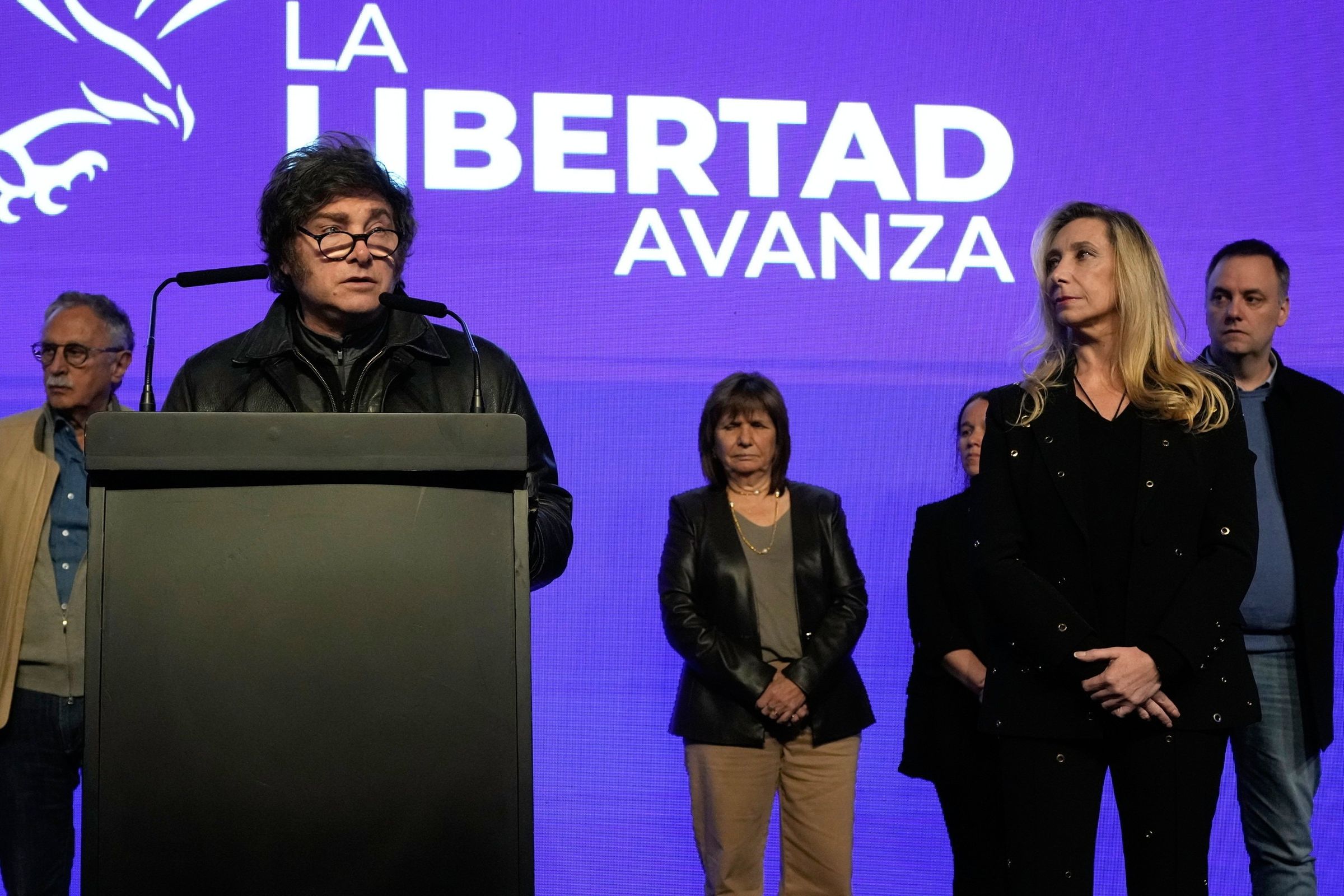
The bellicose president has been unusually contrite since the election.
He has promised “deep self-criticism” and cancelled a trip to Spain to chair a series of cabinet meetings in the presidential palace — a rarity for the wild-haired economist, who typically works out of his residence and delegates politics to advisers.
He promoted allies of his wily cabinet chief Guillermo Francos, one of few political veterans in the libertarian government, and sent them to reopen neglected talks with influential opposition governors to shore up backing for his agenda.
He secured a supportive statement from the IMF, Argentina’s biggest creditor. Yields on Argentine dollar debt, which had surged 2 percentage points on Monday amid a sell off, fell slightly later in the week as investors took note of Milei’s efforts.
Yet the president faces serious dilemmas. The provincial governors will press the weakened government for cash injections for their regions in exchange for supporting his reforms, and Milei has ruled out any move that would threaten his fiscal balance drive.
On Thursday, Milei vetoed a bill championed by the governors to redirect funds held by the national government to the provinces — a move likely to complicate negotiations.
“The government needs to show real agreements with allies, or other signs of political strength,” said Ramiro Blazquez Giomi, a strategist at StoneX financial services company. “I haven’t seen any signs that it is willing to compromise to achieve that.”
Still, analysts say the libertarians will probably do better at the midterms than in Buenos Aires province, a Peronist stronghold where they took 34 per cent of the vote. Winning 40 per cent of the national vote would help defuse the crisis, most agreed.
Right-leaning voters who stayed home in Buenos Aires, where turnout was low, might show up for Milei nationally “out of fear of a return of Peronism”, said Juan Negri, a politics professor at Buenos Aires’ Torcuato Di Tella university. “I don’t think the government is finished by any means.”
However, pollsters warn that voters are growing frustrated with Argentina’s half-finished economic recovery.
Although Milei has stabilised the tumultuous macroeconomy, with annual inflation plunging from 289 per cent in April 2024 to 34 per cent last month, Argentines are still living through a crisis.
Inflation-adjusted wages remain at around 8 per cent below their early 2023 levels, unemployment has ticked up, and economic growth slowed sharply in the second quarter of this year, as the government prioritised tackling inflation. “The macroeconomic results are not reaching the people,” cabinet chief Francos told local radio on Monday.
“Patience is thinning,” said Shila Vilker, director of pollster Trespuntozero, which found Milei’s approval rating tumbled 8 points from late July to late August, to 39.9 per cent.
“Before, there was a pretty prevailing sense of, ‘We have to hold on, things will get better’. Now that is starting to fade.”
Recent market volatility may compound Milei’s challenges. The peso fell 8 per cent over the past month, landing close to its lower limit under Milei’s semi-floating official exchange rate, which is designed to prevent a resurgence of inflation.
If the peso hits its floor, Milei would have to dip into Argentina’s scarce hard currency reserves, made up largely of a $20bn IMF loan, to prop it up. Big dollar sales would worry bondholders.
“Every dollar spent to protect the peso comes at the cost of rising interest premiums” on Argentine debt, said Fernando Marull, head of local financial consultancy FMyA.
On Monday, Milei unveiled a new “political committee” composed of six existing advisers, including his sister, Karina. She has amassed sweeping power over his party and government, and is under fire for both fumbling the provincial elections and being implicated in a bribery scandal that broke last month and damaged Milei’s anti-corruption image.
Leaked audio published by local media suggested she had taken bribes from a government contractor. The Mileis called the accusations “lies”, but failed to account for her actions. Polls show most Argentines believe the allegations.
Perhaps more damaging, analysts say, Karina advocated a failed all-or-nothing political strategy, spurning alliances with centrist parties and relying on poor quality candidates to expand the upstart libertarian party.
“Karina doesn’t have political experience, so she puts too much trust in people who don’t know what they’re doing, and often makes decisions based on personal resentments,” said Ignacio Labaqui, a senior analyst at research group Medley Global Advisors.
Labaqui said Milei might now boost the influence of his political adviser Santiago Caputo, the star strategist whom the president called the “architect” of his 2023 victory. Caputo had called for the government to strike more deals with the opposition.
Yet Milei himself has often lashed out at moderate politicians, calling any who vote against his measures “enemies of good Argentines”.
“We should be more pragmatic,” said one government official, who was not authorised to speak publicly. “If you don’t have allies, the opposition will be the first in line to hurt you when popularity falls.”
That is the risk now, as Milei moves to restart negotiations with centrist governors whose support will be essential if he falls short at the midterms.
“Why would I sit at a table to talk to the same people who haven’t kept their word before?” Gustavo Saenz, governor of Salta province responded in a radio interview, claiming the libertarians had “betrayed” an early alliance by running a vicious campaign against him in provincial elections.
Investors are watching Milei’s troubles closely, said Kezia McKeague, a managing director at McLarty Associates, who advises multinational companies on Argentina.
“We’re in a period of deeper political uncertainty than many expected,” she said. “Investors are not ringing the alarm bells, but they’re thinking, ‘Oh, this is a bit messy right now. I expected smoother sailing to the midterms’.”