Before Russia’s full-scale invasion of Ukraine, President Vladimir Putin addressed the nation, blaming communist leaders for “historic, strategic mistakes” that precipitated the collapse of the Soviet Union.
One of those leaders was Leonid Kravchuk, who died this week aged 88. Kravchuk, a former Soviet apparatchik who adopted the cause of Ukrainian independence and became his country’s first democratically elected president, may have done more than anyone else to bring down the Soviet empire.
A wily bureaucrat and astute tactician, he freed Ukraine from Soviet dominion without bloodshed. He outmanoeuvred hardliners and kept Ukraine remarkably united despite its internal divisions.
Russia could not prop up the USSR without Ukraine, the union’s second most populous state and also a fellow Slavic one. As Serhii Plokhy describes in The Last Empire, his account of the Soviet collapse, “Kravchuk performed a difficult balancing act, maintaining a veneer of loyalty to the centre while aggressively advancing the interests of his homeland.”
Kravchuk’s life story followed his country’s turbulent history. He was born in western Ukraine in what was then Polish territory. As an eight-year old boy living under Nazi occupation, he witnessed German troops executing Jews by machine gun. His father died fighting for the Red Army against the Wehrmacht.
He studied political economy at Kyiv University and joined the Communist party, quickly rising through its ranks. In 1990, as chairman of Ukraine’s supreme soviet, he became the country’s most senior official.
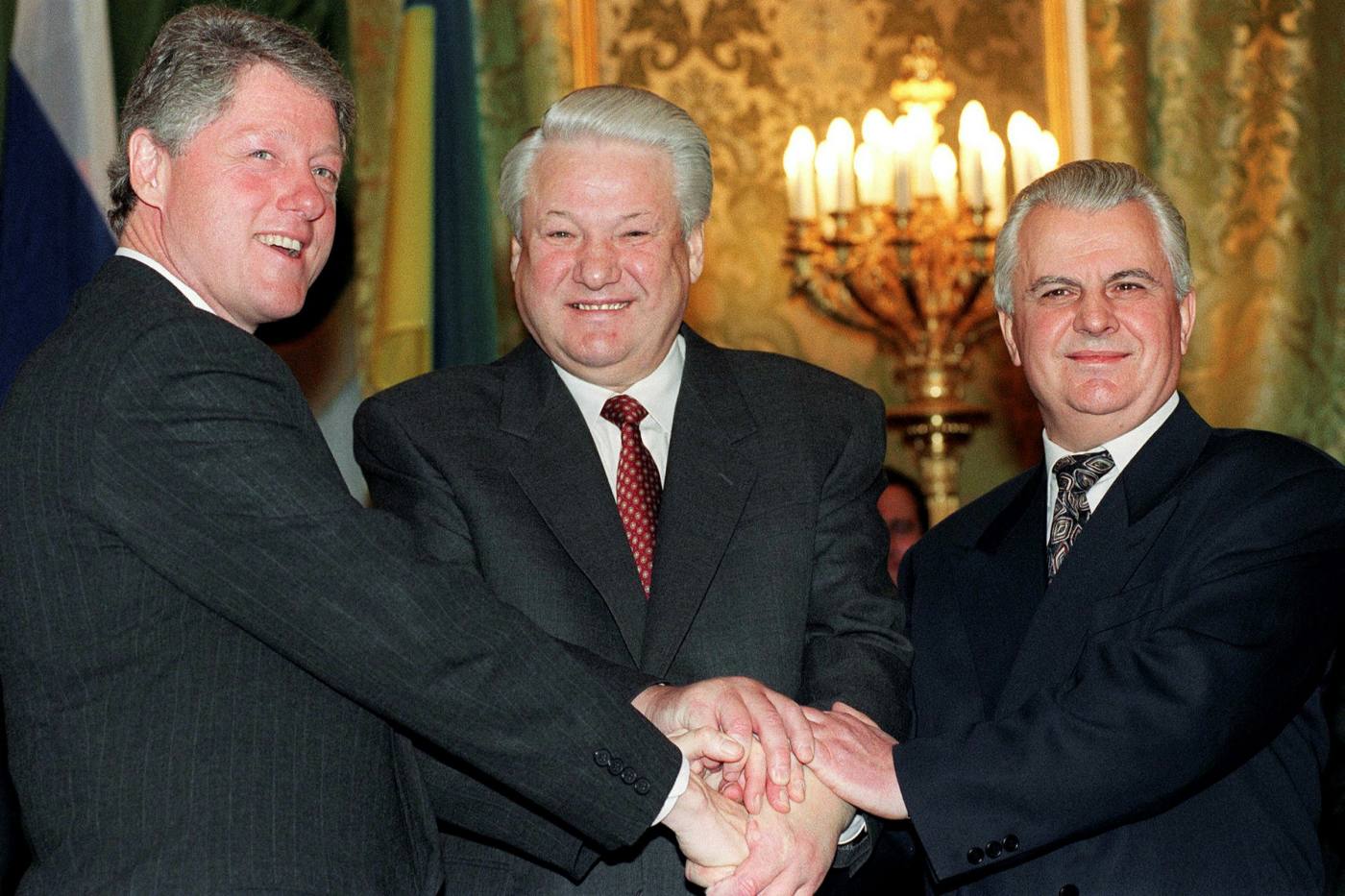
As the Soviet Union crumbled, Kravchuk managed to perform loyalty to his Soviet masters while hastening their end.
Although Kravchuk declined to join Yeltsin’s active resistance to the 1991 coup, he criticised it enough to stay on the right side of history when the putschists faltered. He then left the party.
After the coup attempt, he supported the thousands of Ukrainians who protested in Kyiv in favour of independence. He did so despite pressure from US president George HW Bush, who feared a chaotic collapse of the Soviet Union.
Kravchuk then backed a seismic declaration of independence in the Kyiv parliament. Within eight days, Belarus, Moldova, Azerbaijan, Uzbekistan and Kyrgyzstan followed suit.
Kravchuk assuaged Moscow by agreeing to put independence to a referendum. Gorbachev doubted it would pass — it did, by an extraordinary 90 per cent, with a turnout of 84 per cent. Kravchuk was elected president that same day. The former party head of ideology and servant of the Soviet empire convinced Ukrainians that he was truly committed to their country’s self-determination.
A week later, Yeltsin arranged to meet Kravchuk and Stanislav Shushkevich, his Belarusian counterpart. At a hunting lodge in the Belavezha forest, Yeltsin made the case for both Belarus and Ukraine to stay in a reformed union with Russia. But Kravchuk saw that any such arrangement would be dominated by Moscow. He threatened to walk away, reportedly telling Yeltsin: “And who will you be when you return to Russia? I will return to Ukraine as the president elected by the people, and what will your role be — that of Gorbachev’s subordinate, as before?”
He drafted an alternative plan for a looser Commonwealth of Independent States. Yeltsin acquiesced, seeing in it an opportunity to get rid of Gorbachev. The three leaders agreed to “hereby establish that the USSR as a subject of international law and a geopolitical reality ceases its existence”.
Kravchuk later agreed to give up Ukraine’s share of the USSR’s nuclear arsenal in return for security guarantees from Russia, the US and the UK — these turned out to be worthless when Moscow annexed Crimea in 2014 and orchestrated a separatist war in the Donbas region.
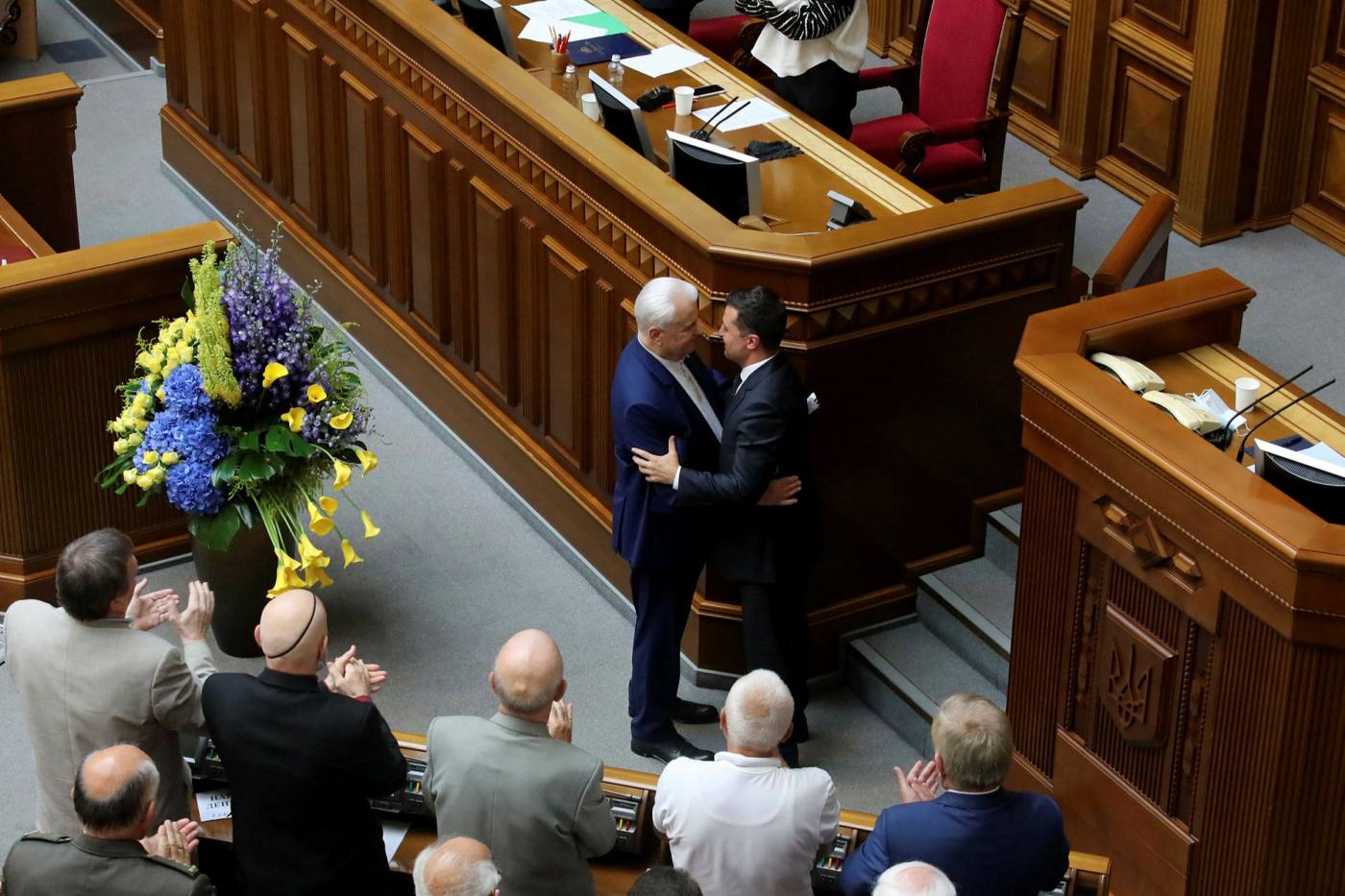
Kravchuk lost the 1994 election to Leonid Kuchma. It was the first uncontested handover of power in democratic Ukraine and the last until Volodymyr Zelensky’s landslide in 2019. Kravchuk became a respected elder statesman, for a period presiding over diplomatic efforts to bring peace to the Donbas region.
Ukrainian President Volodymyr Zelensky said: “He was a person always able to find wise words and express them in such a way that they were heard by all Ukrainians. Particularly in times of crisis. When the future of an entire country can depend on the wisdom of one person.” Ben Hall