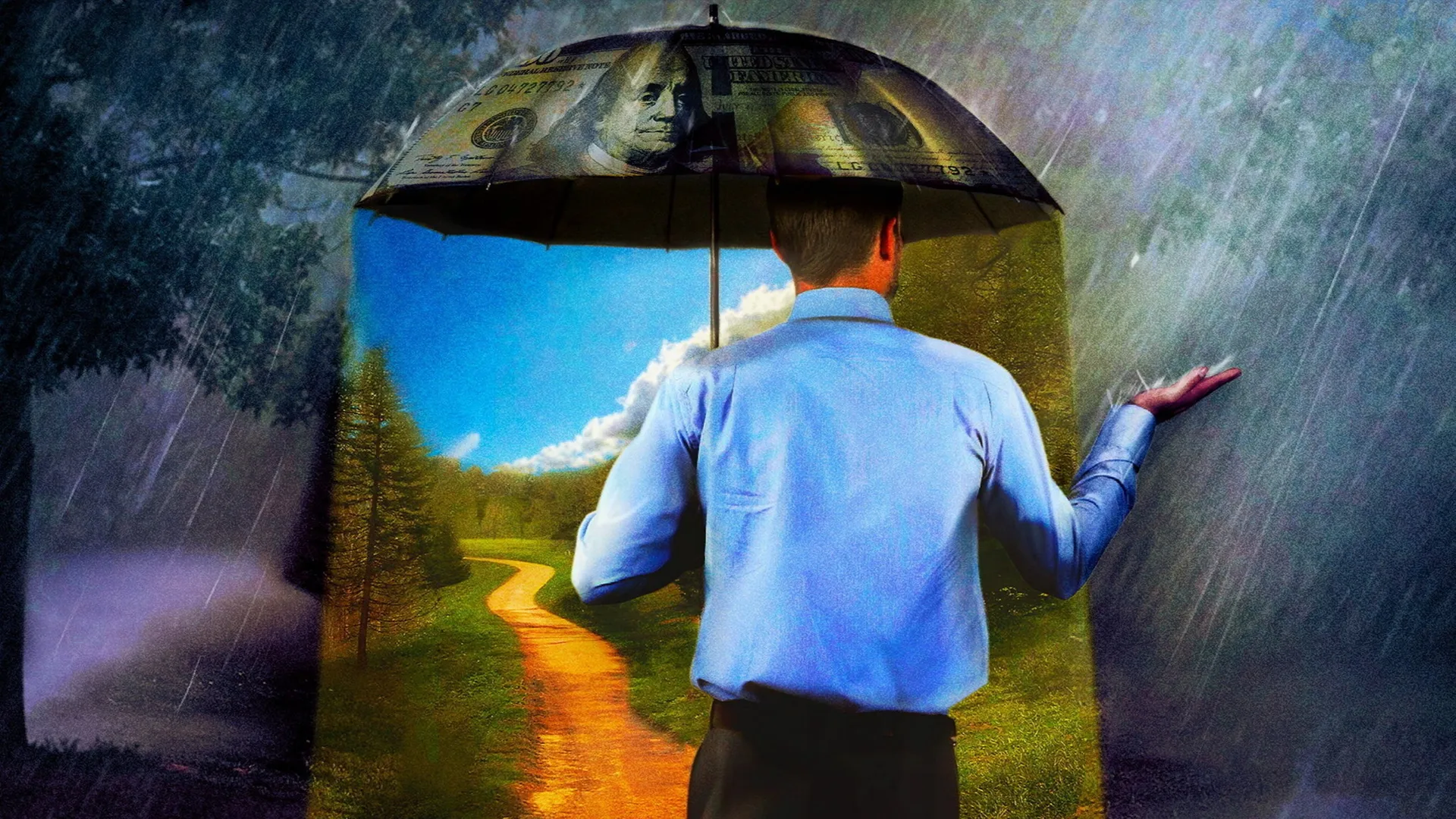
There is a curious idea doing the rounds on the right: that climate change is real, that it is caused by human activity but that European countries cannot meaningfully shape whether the world reaches net zero and is thus able to limit warming. Adding a new fear to flying, Kemi Badenoch opted to use this heatwave week to travel to Stansted airport and criticise the Labour government’s “ideological” focus on net zero.
What is unexpected about this line is that there is a good point in there somewhere. It may well be that despite major advances in solar and renewable energy, the world is not going to reach net zero by the 21st century’s halfway mark. It may well be that smaller countries need to accept that the battle against climate change is being lost at the moment.
It’s also true, as the OBR reiterated last week, that the costs of not reaching net zero are considerably higher than the costs of reaching it. If you think that we are going to have to spend those far larger sums anyway, then it is not unreasonable to think that we need to prioritise measures that both decarbonise and adapt for a warmer world at the same time. (For instance, the fact that the British government currently provides grants to heat pumps, so long as those pumps cannot also provide air conditioning, is perverse.)
What these critics of net zero actually seem to envisage is not a world in which states switch from spending money on the climate transition to spending larger sums on adaptation and resilience, but one in which we and the planet agree to put all of this unpleasantness behind us and spend money on neither.
The world as viewed by Badenoch seems to be one in which the UK accepts that it cannot meet its net zero obligations, and also one in which our Victorian infrastructure, all those buildings designed for moderate temperatures, manages, through force of will or some other miracle, to hold up just fine even as the climate changes.
You can have reasonable arguments about what policy mix of adaptation and mitigation is the right one. If you choose no mitigation, then you are always chasing your own tail as the costs of climate change go up and up. But with no adaptation you are accepting more and more summers like this one, in which many people in Europe will die before their time because of excessive heat.
When it comes to its impact on the future, climate change is the most significant of the crises facing the world: but the magical thinking surrounding it can be found almost everywhere. Take the fact that most wealthy democracies have ageing populations, with a shrinking share of working-age individuals. They also have public policy obligations, which were entered into when they were far younger countries, and from which there is no plausible political route out. Even autocracies cannot escape the need to pay pensions and while democracies can find ways to finesse what and how they pay, anyone who thinks “just cut back” is a viable option if you want to hold on to power, is kidding themselves.
Like climate change, ageing populations are something that require states to do things differently: they impose limits on what the politicians of the day can achieve and instead leave them with obligations.
It is that feeling of chafing under unwanted obligations that makes politicians so keen to find a way out of thinking about climate change. Most people do not go into politics because they want to manage crises — instead, they resent crises because they sap the time and the energy they would rather spend focusing on the reasons they did go into politics, whatever they may be.
The reason why it is tempting to imagine that we can just declare net zero unachievable and move on is that, for many politicians, it means being able to focus on the stuff that excites them, be it social policy or economics or regulation. Similarly, ignoring the ageing population allows you to put off difficult conversations with your electorate or your party about how, exactly, you are going to provide healthcare and welfare for all of them.
The problem is that neither the changing climate nor ageing populations will wait for politicians who would rather think about something else. They won’t proceed at a speed that meets their electorates’ desires to avoid higher taxes and/or higher immigration. Genuine realism in politics is recognising that you have to deal with the circumstances you actually face, not the ones that you want to. The truly “ideological” decision is to think that the pressures on our planet and our public finances can be deferred in favour of easier topics and smaller challenges.