Complex animals appeared on Earth even longer ago than thought, according to a more than 500mn-year-old fossil trove uncovered in south-west China that shows the power of symmetry in evolution.
The discovery dates the surge in oceanic evolutionary diversity known as the Cambrian explosion to before the start of the eponymous geological period 539mn years ago, says research published on Thursday.
The find captures a critical moment when simpler creatures began to evolve into more advanced ones with capabilities that would eventually enable them to thrive on land.
“When we first saw these specimens, it was clear that this was something totally unique and unexpected,” said Luke Parry, co-author of the research published in Science and an associate professor in University of Oxford’s earth sciences department.
The team of China- and UK-based researchers examined more than 700 fossils from a deposit known as the Jiangchuan Biota in Yunnan province. The specimens, which include both previously described and newly identified animals, date from the Ediacaran period that preceded the Cambrian.
“This discovery is extremely exciting because it reveals a transitional community: the weird world of the Ediacaran giving way to the Cambrian where the animals are much easier to place in groups that are alive today,’’ Parry said.
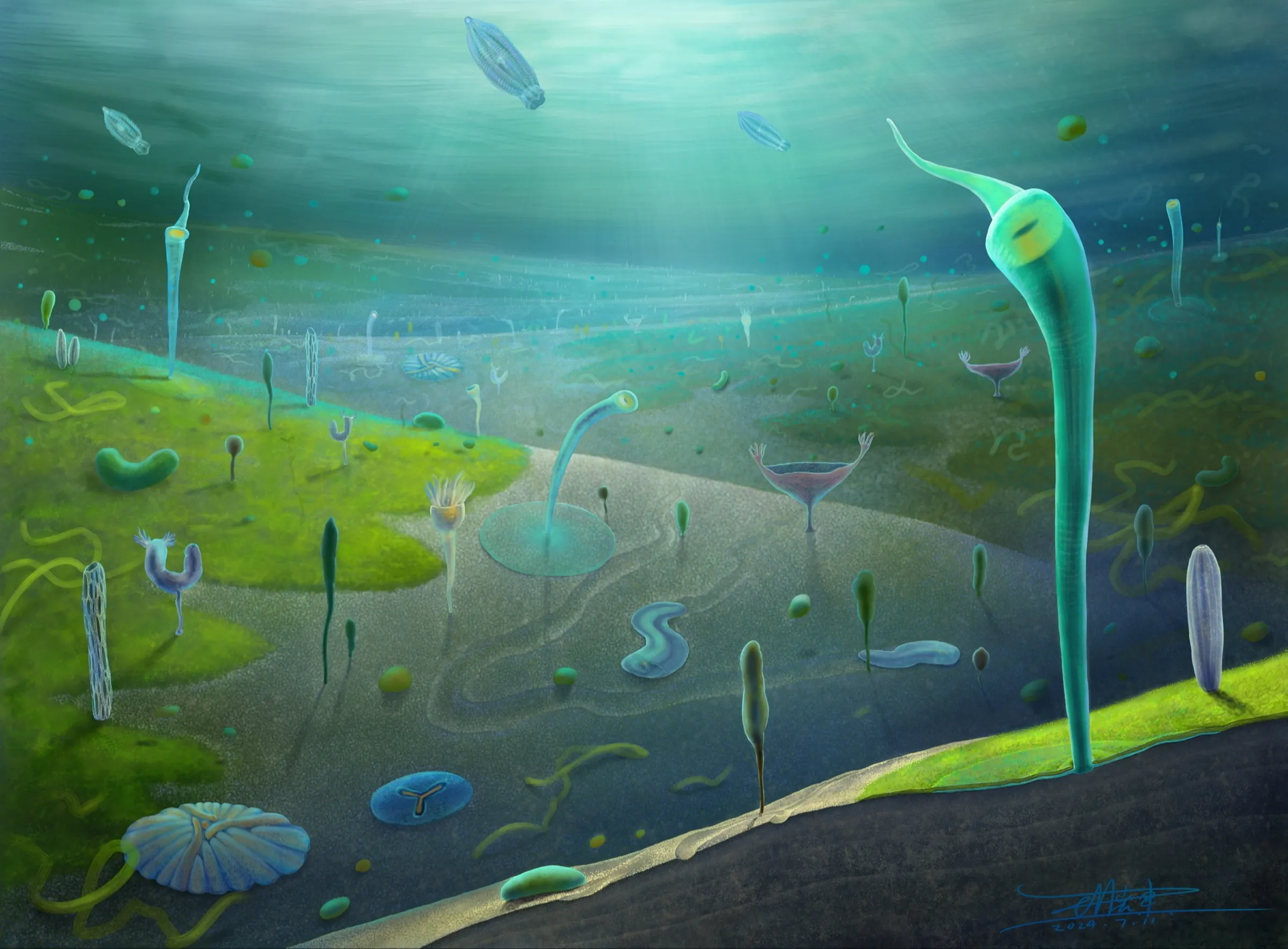
The most striking finds were fossils thought to be the oldest known deuterostomes — the broad biological group that includes humans and other vertebrates. The specimens uncovered by the researchers included acorn worms, which often live in U-shaped burrows and use a pair of tentacles on their heads to catch food.
The discovery appears to confirm theories, based on biological sampling and fossil traces, that suggested deuterostomes emerged before the Cambrian began.
The China find means that chordates — a group including animals with backbones — must also have existed at this time, said Frankie Dunn, an Oxford university researcher and co-author of the work.
The fossils show how symmetry plays a crucial role in the evolution of sophisticated lifeforms because of the biological possibilities it can offer.
Acorn worms are significant because — like vertebrates — they possess a quality known as bilateral symmetry. In humans, this means our bodies comprise identical right and left halves but differ between both front and back and top and bottom.
This is liberating biologically because it allows for more complex bodily organisation than in an animal with more lines of symmetry, such as jellyfish.
Bilaterally symmetrical organisms can concentrate helpful features such as primary sensory organs in the head. They can possess features that help with directed movement, such as powerful legs or tails.
“Animals with bilateral symmetry also evolved other features in tandem like a one-way gut with a mouth and anus for efficient food processing, complex musculature and nervous systems which together allow them to explore the world effectively in 3D through burrowing and swimming,” Parry said.
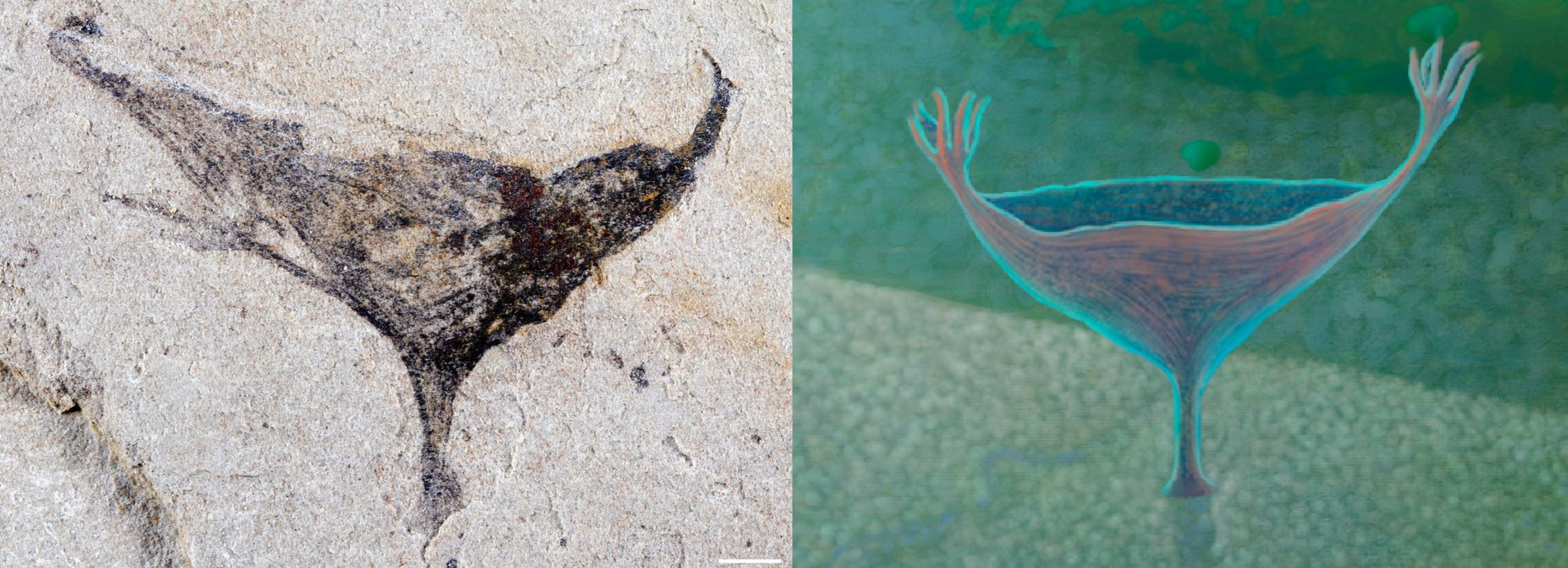
The China find was a “remarkable assemblage” that brought together two crucial periods of time, according to Imran Rahman, a principal researcher at the UK Natural History Museum and expert on early animal evolution.
“This bridges the gap between the oldest fossil evidence of deuterostomes and estimates for their origin based on molecular studies, confirming that the so-called Cambrian explosion actually began at the end of the Ediacaran period,” Rahman said.